Client: Mr. Verge, homeowner
Building: Semi-detached house built in 1946
Location: Québec City
Heated area: 1,400 sq. ft. covered by radiators
Heating system before the project: Electric boiler with hot-water radiators controlled by a single thermostat on the main floor for the entire house.
The Project
As part of a major renovation, the client wanted to modernize the heating system while preserving the home’s original radiators. Because the heating was controlled by a single thermostat, heat distribution was uneven between the main floor and the upper level. The goal was to improve thermal comfort by enabling room by room control while maintaining the home’s heritage character.
Project Execution
Ecorad proposed adjustments to the radiators to optimize their output based on the size of each room. Thanks to precise planning and a well structured workflow, the installation was completed within budget and met all client expectations.
Benefits / Results
Enhanced comfort – Soft, even heat that doesn’t dry out indoor air in winter.
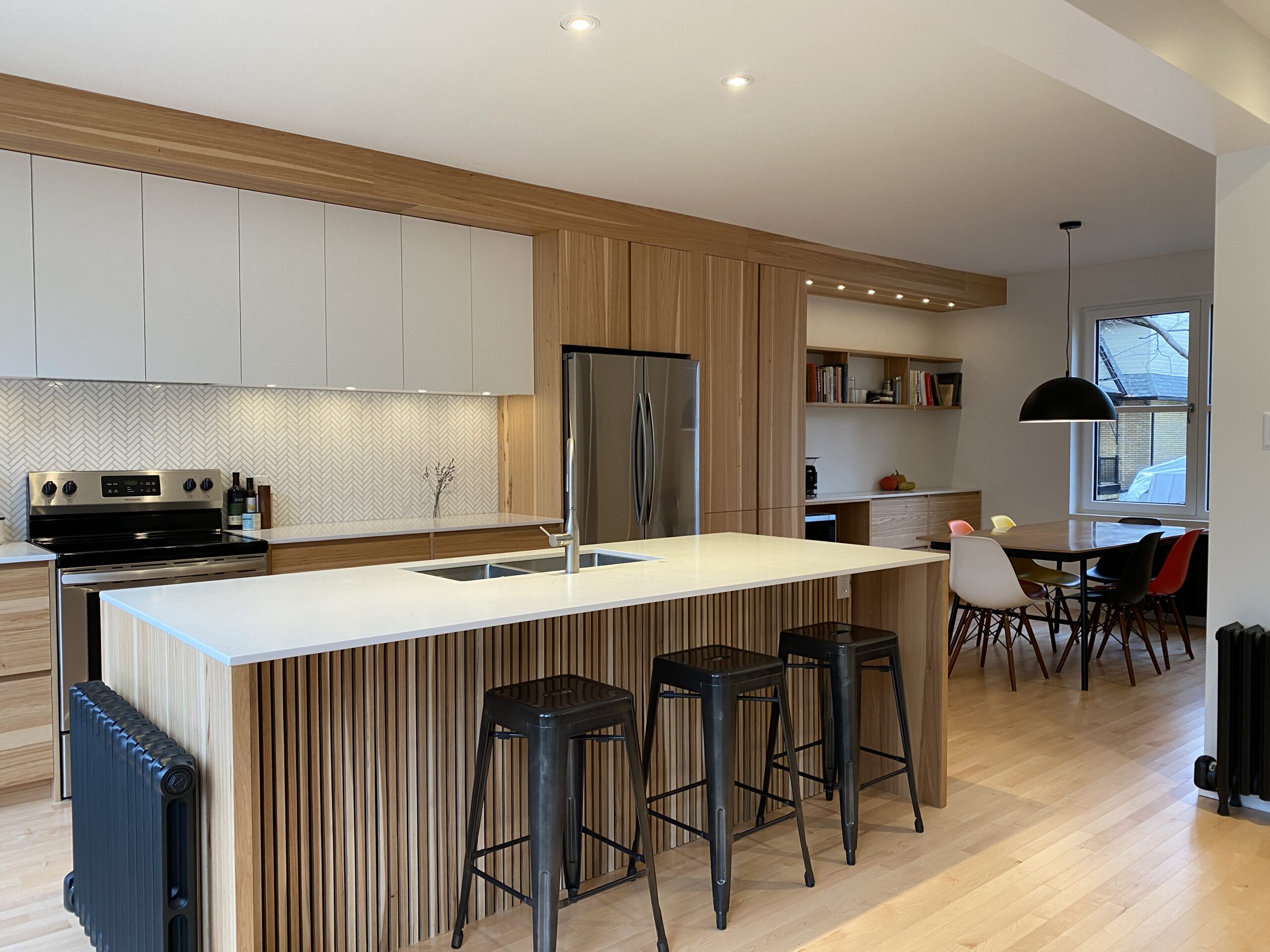
Aesthetic value – Restored radiators fully integrated into the décor.
Preservation – Reuse of existing materials.
Flexibility – Ability to turn off heating during peak demand periods.
Efficiency – High-performance heating with strong heat retention.
“Ecorad is an excellent heating solution, especially for renovations. The comfort is remarkable, the heat is soft, and the radiators enhance the architectural heritage. These radiators were often installed more than 75 years ago, and they will remain useful and efficient for many years to come.”
— Mr. Verge, homeowner
Why Choose Ecorad?
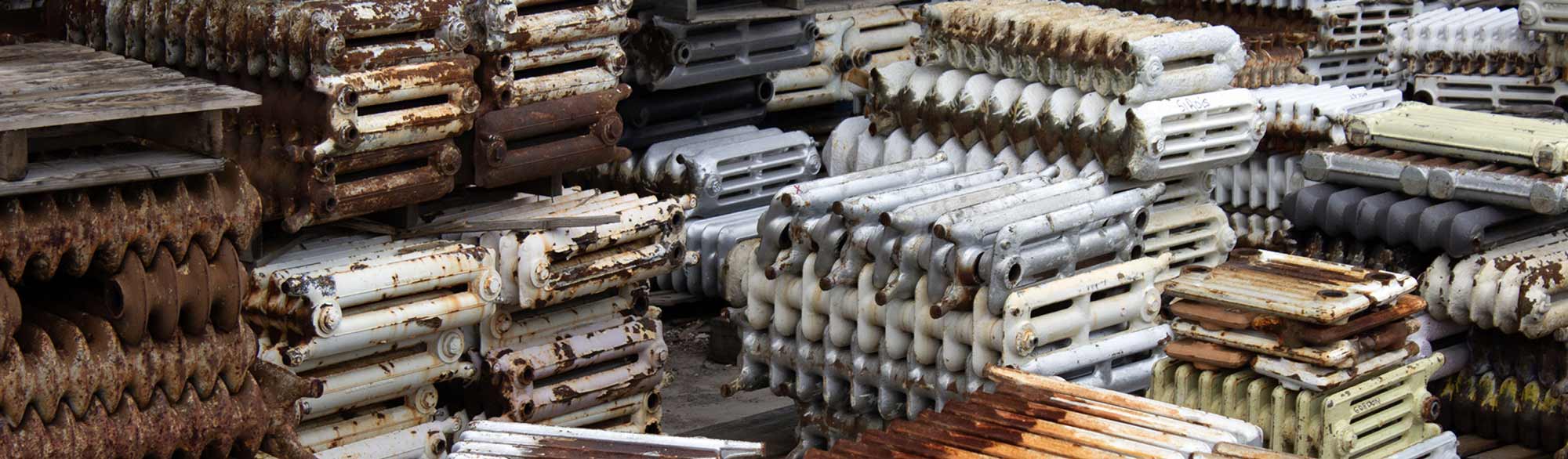
- Recovery of existing radiators that had lost performance after decades of paint buildup. Performance is restored through internal cleaning and paint stripping.
● Independent room-by-room control for personalized comfort.
● Improved aesthetics and increased living space thanks to the removal of the boiler—the mechanical room was converted into an additional living area.
● More affordable than a full boiler-based system with individual valves.
● Compatible with Hydro-Québec’s Hilo program, allowing additional savings by maximizing the radiators’ natural thermal storage capability.
Want to learn more about how this project was carried out? Continue reading the technical section below.
TECHNICAL SECTION
Ecorad deployed an efficient, structured workflow from thermal analysis to final commissioning.
Thermal Optimization and Precision Engineering
For the renovation of this 1946 semi-detached home, Ecorad applied a customized thermal engineering approach. Each radiator was analyzed based on:
- The heating load required for its room
● The thermal capacity of the unit
This analysis allowed the restored radiators to be tuned to deliver optimal comfort while respecting the building’s constraints.
Project Execution
Ecorad worked closely with the general contractor, who was also responsible for the electrical and plumbing work. Thanks to precise coordination among all trades, the project progressed smoothly with no delays or downtime.
During the project, a delivery error occurred, an extra radiator was mistakenly shipped to the client. Ecorad immediately acknowledged the issue and resolved it. The quick and transparent handling of the situation reassured the client, whose satisfaction and perception of service quality were unaffected.
Radiator Restoration Process
- PAINT STRIPPING
Each radiator is placed in a blasting chamber to remove paint layers. This creates a clean and uniform surface while preserving the micro texture needed for the protective coating. Blasting with steel beads is safer, more ecological, and less damaging to the patina than abrasive sandblasting.
Lead based paint residues are disposed of according to Environmental Quality Guidelines. - DISASSEMBLY
Radiators are disassembled into individual sections for complete internal and external cleaning. - INTERNAL CLEANING
Each section undergoes high pressure internal washing to remove sludge and debris. - REASSEMBLY
Radiators are reassembled section by section using new joining nipples and fiber gaskets. - LEAK TESTING
Units are tested with air pressure in a hot solution to validate metal expansion and prepare the radiators for painting. - ELECTRIC CONVERSION
Radiators are filled with a precise water and glycol mixture. An electric heating element is installed and the radiator is permanently sealed. Electrical connections are added and tested in accordance with UL standards. - PAINTING
Radiators are preheated to maximize paint adhesion. An industrial grade acrylic enamel coating is sprayed on for long lasting protection. - INSPECTION & PACKAGING
Each radiator is thoroughly inspected before leaving the workshop and packaged individually.
Video of the restoration process
Technology Integration
Electric conversion is an optional complement to restoration. This innovative solution developed by Ecorad restores the radiators’ original performance and surpasses it.
- Converts centralized heating management into flexible multizone control with room by room adjustment, an economical way to increase comfort and fine tune temperature in each space.
● Integrates seamlessly with modern building management and smart home systems.
● Compatible with nearly all cast iron radiators already installed in homes.
● Eliminates obsolete boilers and piping systems that are costly to maintain.
● Offers excellent thermal storage capacity during peak demand management as radiators remain warm even when heating is paused.
Benefits for Building Professionals
This project illustrates a solution that combines:
- Reuse of existing components with technical optimization
● Reduced mechanical footprint (removal of boiler and piping)
● Compliance with heritage and energy standards
● Adaptability to complex renovation projects
Comfort. Heritage. Performance.
This solution demonstrates that modernization can be achieved without compromising character, while reducing costs and energy use. A 1946 home reinvented for 21st-century living: that’s the Ecorad expertise.